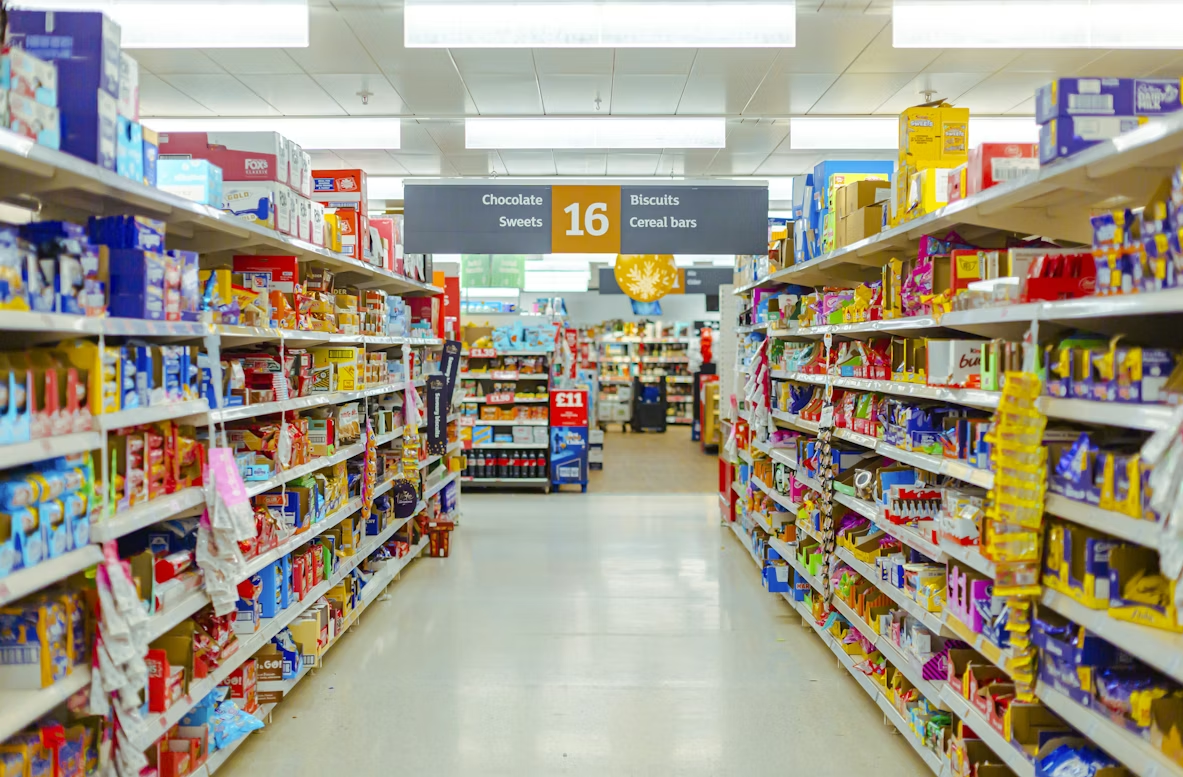
This isn’t about coupons or extreme discipline. It’s about walking the store differently. Grocery stores aren’t designed for convenience; they’re designed for spending.
Throughout the grocery store, every aisle, display, and endcap is engineered to influence what you buy, how long you linger, and how much ends up in your cart.
Luckily, once you understand the psychology of layout and apply a few simple grocery store savings hacks, you can flip the system in your favor and consistently lower your total without changing what you eat.
Why the Perimeter Isn’t the Whole Story
You’ve probably heard the advice to “shop the perimeter.” While that’s directionally helpful, it’s incomplete. Stores place essentials like produce, dairy, and meat around the edges to encourage you to pass through high-margin zones to purchase them.
What matters isn’t just where you shop, but how you move. Wandering invites impulse buys. Purposeful routing cuts exposure to profit traps.
The real savings come from minimizing time spent in areas designed to trigger add-ons, not from avoiding entire sections outright.
See The Family Savings Playbook: Small Daily Swaps With Big Annual Impact for more small savings habits.
The Power Aisles That Inflate Your Cart
Certain aisles are engineered to generate impulse spending: snacks, beverages, cereal, and seasonal displays. These areas feature the highest margins and the most visual stimulation.
Endcaps, those displays at the ends of aisles, are especially dangerous. They feel promotional, but they’re often full-price items placed for maximum visibility, not savings.
The layout hack is simple: skip endcaps entirely unless you already know what’s on them. Most real deals live inside aisles, not at the ends.
Check out The Cheapest Days of the Week to Buy Everything to pair smarter routing with smarter timing.
The Back-of-Store Trick That Changes Behavior
Grocery stores intentionally place staples like milk, eggs, and bread at the back. The idea is to make you pass dozens of tempting items first.
Instead of following the natural flow, go straight to the back immediately. Grab staples first while your cart is empty, and your decision fatigue is low.
Once essentials are secured, you’re less likely to justify impulse items “because you still need basics.” Psychologically, your brain shifts from acquiring to finishing.
Why Smaller Carts Save Real Money
Large carts signal abundance. When your cart feels empty, your brain wants to fill it. This is why stores rarely offer smaller carts during peak hours.
If possible, use a basket or a smaller cart. The physical limit creates a spending ceiling without requiring constant self-control.
If you must use a large cart, place a personal divider, such as a reusable bag, inside it to keep your items organized. That visual boundary mimics a smaller cart, reducing overfilling.
For another simple way to cut spending, read The Pantry Reset Trick That Saves $150/Month Without Couponing.
The One-Aisle Rule That Stops Add-Ons
Before entering any aisle, ask one question: “Is there something specific here I planned to buy?” If the answer is no, skip it.
This single rule eliminates most impulse purchases without banning categories entirely. You still buy snacks; you buy them intentionally.
Stores rely on curiosity and novelty. Removing those triggers cuts spending more effectively than willpower ever could.
The Checkout Zone You Should Never Browse
Checkout lanes are designed for last-minute spending when your defenses are at their lowest. Candy, drinks, and small “treat” items dominate this space for a reason.
Don’t browse. Look forward, not down. If possible, choose self-checkout lanes with fewer impulse items.
Those few dollars per trip add up faster than almost any other grocery habit.
Don’t miss The Trick Stores Use to Hide Clearance Online and How to Find It to uncover hidden deals.
The Snoop’s Rule for Grocery Savings
You don’t need to change what you buy, just how you move. Direct routes, smaller carts, and intentional aisles quietly reduce spending without feeling restrictive.
Grocery stores win when you shop passively. You win when you shop deliberately.
Once you understand the layout, your total drops naturally and stays there.